

Definition and Classification of In Vitro Diagnosis
Published:
2024-04-11
In-vitro diagnostics (IVD) refers to diagnostic methods that obtain clinical diagnostic information by testing human samples (blood, body fluids, cells, tissues, etc.) outside the human body. Internationally, it is known as IVD (in-vitro diagnostics).
(1) Definition of In Vitro Diagnosis
In vitro diagnosis refers to a diagnostic method that obtains clinical diagnostic information by testing human samples (blood, body fluids, cells, tissues, etc.) outside the human body. Internationally, it is collectively referred to as IVD (In Vitro Diagnostics).
Globally, about two-thirds of medical decisions are currently based on diagnostic information. Improving diagnostic technology and increasing diagnostic methods help provide more scientific medical decision-making for the prevention, diagnosis, and treatment of diseases. In this context, in vitro diagnosis has become an important area of medical development in recent years and is known as the "doctor's eyes."
(2) Classification of In Vitro Diagnosis
According to different detection principles and methods, in vitro diagnosis can generally be divided into clinical biochemistry diagnosis, clinical immunodiagnosis, molecular diagnosis, hematology and body fluid diagnosis, and microbiology diagnosis. The definitions and characteristics of various in vitro diagnoses are as follows:

According to different testing environments and conditions, in vitro diagnosis can also be divided into professional laboratory diagnosis and point-of-care testing (POCT, Point of Care Test). Point-of-care testing refers to a clinical testing diagnostic method performed at the patient's bedside. Point-of-care testing focuses on immediate testing of samples at the sampling site, eliminating the complex procedures of testing samples in a professional laboratory, and allowing for rapid acquisition of test results.
Different types of in vitro diagnostics have certain differences in terms of characteristics and technological maturity, and it is expected that they will not be able to completely replace each other in the short term.
(3) In Vitro Diagnostic Instruments and Reagents
In vitro diagnostic products consist of in vitro diagnostic instruments and reagents.
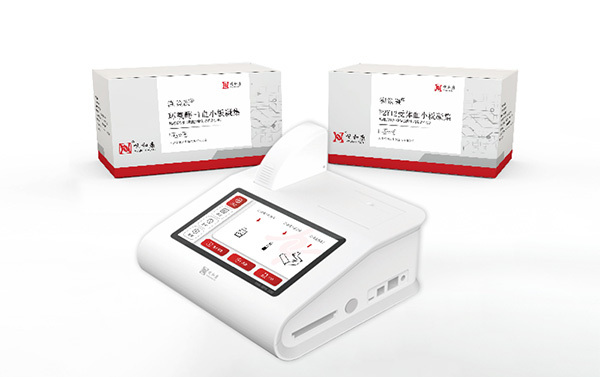
In vitro diagnostic instruments mainly include biochemical analyzers, blood analyzers, enzyme-linked immunosorbent assay (ELISA) instruments, chemiluminescence immunoassay instruments, real-time fluorescence quantitative PCR instruments, flow cytometers, etc.
In vitro diagnostic reagents refer to reagents, reagent kits, calibrators, and quality control products used alone or in combination with in vitro diagnostic instruments for in vitro diagnosis of human samples (blood, body fluids, cells, tissues, etc.).
In most cases, in vitro diagnostic instruments and reagents are used in combination to form an in vitro diagnostic system. In the development of the in vitro diagnostic industry, in vitro diagnostic instruments and reagents have each formed numerous commercial brands, and in vitro diagnostic systems have correspondingly developed into two types: "open systems" and "closed systems." An "open system" refers to an in vitro diagnostic system in which in vitro diagnostic instruments can be combined with in vitro diagnostic reagents from different manufacturers and models. A "closed system" refers to an in vitro diagnostic system in which in vitro diagnostic instruments can only be combined with specific in vitro diagnostic reagents. In the fields of clinical biochemistry diagnosis, molecular diagnosis, and radioimmunoassay, enzyme-linked immunoassay, and colloidal gold in clinical immunodiagnosis, in vitro diagnostic systems are mainly "open systems"; in the fields of hematology and body fluid diagnosis, microbiology diagnosis, and chemiluminescence in clinical immunodiagnosis, in vitro diagnostic systems are mainly "closed systems."
Keywords:
Learn more about industry trends





Contact Information
Focus on providing perfect services for our clients
No. 2, Building 2, No. 4, Haitai Development Road 2, Huayuan Industrial Park (outer ring), Binhai High-tech Zone, Tianjin, China
More information